Fibronectin Cell Adhesion Assays

Fibronectin Cell Adhesion Assays
  • Full quantitation of cell adhesion with no manual cell counting
  • Fluorometric or colorimetric detection
  • Plates precoated with uniform substrate layer of Fibronectin


Frequently Asked Questions about this product

Email To BuyerPrint this PageCopy Link
Ordering

Please contact your distributor for pricing.

CytoSelect™ 48-Well Cell Adhesion Assay, Fibronectin
Catalog Number
CBA-050
Size
48 assays
Detection
Colorimetric
Manual/Data Sheet Download
SDS Download
Price
$385.00
CytoSelect™ 48-Well Cell Adhesion Assay, Fibronectin
Catalog Number
CBA-051
Size
48 assays
Detection
Fluorometric
Manual/Data Sheet Download
SDS Download
Price
$420.00
Product Details

Cell adhesion is a complex process involved in migration/invasion, embryogenesis, wound healing and tissue remodeling. Cells adhere to the extracellular matrix, forming complexes with cytoskeleton components that can affect cell motility, differentiation, proliferation, and survival.

Our CytoSelect™ 48-Well Cell Adhesion Assays provide a fully quantitative method for the evaluation of cell adhesion. The 48-well plate is precoated with Fibronectin. Just follow a simple protocol:
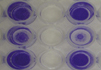
  1. Cells are seeded onto the substrate.
  2. Adherent cells attach, while non-adherent cells are washed away.
  3. Adherent cells are quantified on a standard plate reader or fluorometer.
Recent Product Citations
  1. Ko, S.N. et al. (2023). The Inhibitory Effects of Glycyrrhiza uralensis on human Platelet Aggregation and Thrombus Formation. Biomed. Sci. Lett. 29(4):242-248. doi: 10.15616/BSL.2023.29.4.242 (#CBA-050).
  2. Park, S.N. & Kwon, H.W.  (2023). The inhibitory effects of glabridin on human platelet aggregation and thrombus formation. J Appl Biol Chem. 66(60):455-461. doi: 10.3839/jabc.2023.060 (#CBA-050).
  3. Lee, Y. Y. et al. (2023). The anti-platelet activity of panaxatriol fraction and panaxatriol fraction of Korean Red Ginseng in vitro and ex vivo. J Ginseng Res. doi: 10.1016/j.jgr.2023.03.003 (#CBA-050).
  4. Kim, J.Y. et al. (2022). ARL6IP5 reduces cisplatin-resistance by suppressing DNA repair and promoting apoptosis pathways in ovarian carcinoma. Cell Death Dis. 13(3):239. doi: 10.1038/s41419-022-04568-4 (#CBA-050).
  5. Shin, J.H. et al. (2021). Derrone Inhibits Platelet Aggregation, Granule Secretion, Thromboxane A2 Generation, and Clot Retraction: An In Vitro Study. Evid Based Complement Alternat Med. 2021:8855980. doi: 10.1155/2021/8855980 (#CBA-050).
  6. Shin, J.H. et al. (2021). Antiplatelet effect of cudraxanthone B is related to inhibition of calcium mobilization, αIIbβ3 activation, and clot retraction. Appl Biol Chem. doi: 10.1186/s13765-020-00575-1 (#CBA-050).
  7. Schweitzer, K.S. et al. (2020). IGSF3 mutation identified in patient with severe COPD alters cell function and motility. JCI Insight. doi: 10.1172/jci.insight.138101 (#CBA-050).
  8. Kwon, H.W. (2018). 20(S)-ginsenoside Rg3 inhibits glycoprotein IIb/IIIa activation in human platelets. J Appl Biol Chem. 61:257−265. doi: 10.3839/jabc.2018.037 (#CBA-050).
  9. Li, Y. et al. (2018). Visualization and Quantification of Sortase Activity at the Single-Molecule Level via Transpeptidation-Directed Intramolecular Förster Resonance Energy Transfer. Anal Chem. 90(21):13007-13012. doi: 10.1021/acs.analchem.8b03716 (#CBA-050).
  10. Irfan, M. et al. (2018). Ginsenoside-Rp3 inhibits platelet activation and thrombus formation by regulating MAPK and cyclic nucleotide signaling. Vascul Pharmacol. 109:45-55. doi: 10.1016/j.vph.2018.06.002 (#CBA-050).
  11. Ma, D. M. et al. (2016). SDF-1/CXCR7 axis regulates the proliferation, invasion, adhesion, and angiogenesis of gastric cancer cells. World J Surg Oncol. 14:256 (#CBA-050).
  12. Li, Y. et al. (2016). High stoichiometry phosphorylation of Talin at T144/T150 or S446 produces contrasting effects on Calpain-mediated Talin cleavage and cell migration. J Cancer. 7:1645-1652 (#CBA-050).
  13. Jiang, F. et al. (2015). CYP3A5 functions as a tumor suppressor in hepatocellular carcinoma by regulating mTORC2/Akt signaling. Cancer Res. 75:1470-1481 (#CBA-050).
  14. Chen, L. et al. (2015). Both mTORC1 and mTORC2 are involved in the regulation of cell adhesion. Oncotarget. 6:7136-7150.
  15. Cervera, A.M. et al. (2008). Cells silenced for SDHB expression display characteristic features of the Tumor Phenotype. Cancer Res. 68:4058-4067 (#CBA-050).